
Instagram Millions of Users’ Personal Data Leaked on Dark Web (January 2026)
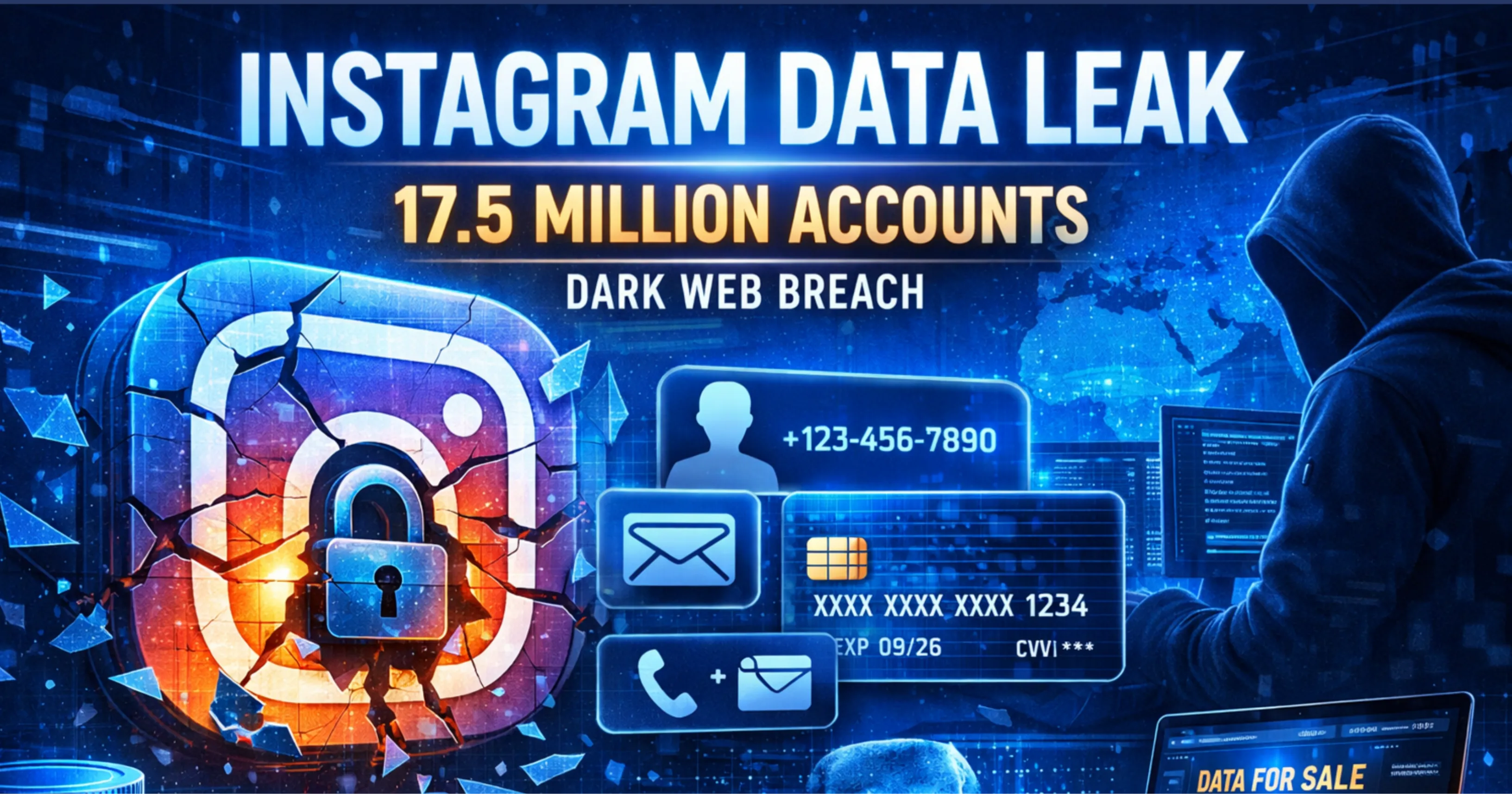
In January 2026, reports emerged claiming that personal data of approximately 17.5 million Instagram users was being shared and sold on dark web forums. While Meta denied any direct breach of its internal systems, cybersecurity researchers confirmed the circulation of large-scale scraped datasets, raising serious privacy and security concerns for Instagram users worldwide.
This article explains what actually happened, how the Instagram data leak occurred, what information was exposed, real risks users face, and evidence-based steps to secure Instagram accounts after the dark web data leak.
Incident Overview
| Platform | |
| Affected Users | Approximately 17.5 Million |
| Leak Location | Dark Web Forums & Underground Marketplaces |
| Confirmed Password Leak | No |
| Timeframe | Data Collected in 2024, Resurfaced January 2026 |
What Data Was Exposed?
According to multiple cybersecurity investigations, the leaked Instagram dataset contains personal and contact-level information rather than login credentials. This distinction is critical, as many online reports incorrectly described the incident as a full Instagram hack.

Exposed Data Fields
- Usernames and profile handles
- Full names linked to accounts
- Email addresses used for registration
- Phone numbers (in many records)
- Partial location data in limited cases
No verified evidence suggests that passwords, private messages, or financial information were part of the leaked dataset.
How Did the Instagram Data Leak Happen?
The Instagram data leak was not the result of a traditional server breach. Instead, researchers believe the data originated from large-scale scraping through inadequately secured API endpoints that were accessible during 2024.
Click to understand API Scraping
API scraping involves automated tools collecting publicly visible or semi-public data at scale. When rate limits, authentication checks, or monitoring are weak, attackers can harvest millions of records without breaching internal systems.
| Factor | Explanation |
|---|---|
| API Exposure | Public-facing endpoints allowed mass profile scraping |
| Timeline | Data collected earlier, sold later on dark web |
| System Breach | No confirmed compromise of Instagram servers |
Password Reset Email Scare Explained
Around the same time the dark web dataset surfaced, millions of Instagram users reported receiving unexpected password reset emails. This caused widespread panic and speculation about an ongoing hack.
Meta later clarified that these emails were triggered due to a technical issue that allowed external actors to initiate password reset requests without accessing user accounts.
Receiving a password reset email does not mean your Instagram account was accessed.
Real Risks After the Instagram Data Leak
Although passwords were not leaked, the exposed contact information significantly increases the risk of targeted cyberattacks.
- Phishing emails impersonating Instagram support
- SMS-based scams using leaked phone numbers
- SIM swap attacks targeting SMS two-factor authentication
- Account impersonation and social engineering attempts
How to Check If Your Instagram Data Was Leaked
Users can verify whether their email address or phone number has appeared in known breaches using trusted breach notification databases. These services aggregate verified data leaks and alert users when their information is exposed.
Security Actions to Protect Your Instagram Account
| Action | Reason |
|---|---|
| Enable App-Based 2FA | Prevents SIM swap attacks |
| Change Password | Reduces risk from reused credentials |
| Ignore Suspicious Links | Avoids phishing-based takeovers |
| Secure Email Account | Email controls Instagram recovery |
Content Creators and Business Accounts
Influencers, verified profiles, and business accounts face a higher likelihood of targeted attacks due to their visibility and monetization value. Fake copyright strikes, brand impersonation emails, and account recovery scams are commonly used against high-reach profiles.
Summary
The January 2026 Instagram data leak highlights the risks associated with large-scale data scraping rather than a direct platform breach. While Instagram passwords were not exposed, leaked contact information enables phishing, impersonation, and social engineering attacks. Users who follow basic security practices can significantly reduce their risk despite the data appearing on dark web forums.
Data exposure does not equal account compromise, but negligence can turn exposure into loss.
// Example: Secure Account Mindset
const instagramUser = {
    password: "unique",
    twoFactorAuth: "app-based",
    clicksSuspiciousLinks: false,
    riskLevel: "Low"
};